How to prioritize boat sampling trips across a multi-lake source water network
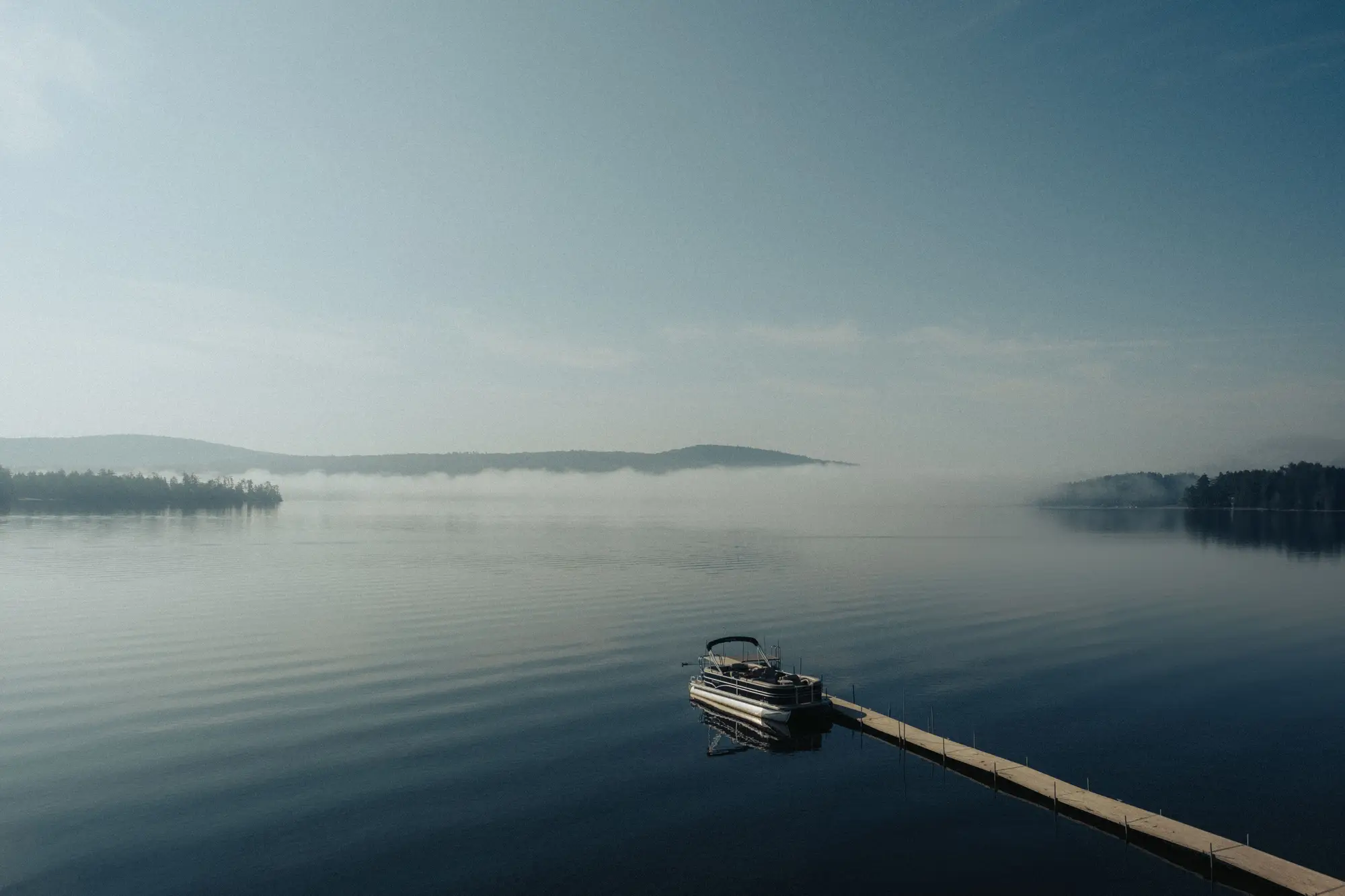
If your utility draws from more than two or three source lakes, you already know the math doesn't work. One crew, one boat, a Hach meter, and a route that takes half a day per lake once you count launch time, transects, and the drive back. Six lakes means three sampling days a month if nothing else goes wrong. Twelve lakes means you're not covering half of them on any real cadence, and you're guessing about the rest.
The fix isn't a bigger crew. Most utilities aren't adding FTEs to chase algae. The fix is a ranking system that tells you, every week, which lakes actually need the boat and which ones can wait.
Rank lakes by risk, not by rotation
A fixed rotation (Lake A on Monday, Lake B on Tuesday, repeat) treats every lake as equally likely to have a problem this week. That's rarely true. A few factors that should move a lake up the list:
- Intake proximity and treatment sensitivity. A lake feeding a plant with limited coagulation capacity or no ozone deserves a shorter leash than one feeding a facility built for high-turbidity raw water.
- Bloom history. A lake with two cyanobacteria advisories in the last three summers isn't the same risk as one that's never triggered a taste-and-odor complaint.
- Watershed loading events. Recent heavy rain, a known agricultural runoff pattern upstream, or a fish kill reported by a neighbor all push a lake up the queue regardless of where it sits in the rotation.
- Recent trend direction. A lake where turbidity has been climbing for three straight reads needs eyes sooner than one that's been flat for a year.
The trouble with ranking by these factors is that most of them require current information you don't have until you're already out there with the meter. You know last month's chlorophyll-a reading. You don't know this week's, and that's exactly the gap that turns sampling into guesswork instead of triage.
Build the schedule around a weekly screen, not a calendar
The utilities that handle this well don't try to sample every lake every week. They use a cheaper, broader signal to flag which lakes have moved, then send the boat where the signal says something changed. That screen doesn't replace the grab sample. It tells you where the grab sample is worth the diesel.
In practice that means a sampling calendar with two tiers. Tier one is a short list of lakes that get sampled on a near-fixed schedule because of intake sensitivity or bloom history, no matter what. Tier two is everything else, and the visit gets triggered by a change in the weekly signal: a jump in apparent turbidity, a clarity drop, a greening trend on a lake that's normally clear. When nothing's moved, that lake can go another week or two without a boat trip, and you have a record of why.
This is also the piece that holds up under a records request or a state inspection. "We sampled Lake A in April and haven't been back" looks bad on its own. "We sampled Lake A in April, and the weekly clarity read has shown no significant change since" is a defensible answer, because you have something documenting the weeks in between even when the boat didn't go out.
Getting that weekly signal without flying a drone over every lake in the region is the actual bottleneck for most mid-size utilities. A weekly chlorophyll-a, turbidity, and clarity read on every lake in your region gives the tier-two half of this schedule something to run on, so the ranking above isn't based on last month's numbers and a hunch.
Treat the boat as your confirmation tool. The weekly screen does the detection work, and a twelve-lake network turns into a short, ranked queue instead of twelve separate problems you're guessing at.
If a weekly read across the whole network sounds like the piece you're missing, that's the gap Water Quality Retrieval was built to close.